
During NYSC, money rarely comes from just one place. There's your monthly allowance; your PPA might pay a stipend. You may have a side hustle, take on freelance jobs, or occasionally receive support from family.
The challenge is that everything usually ends up in the same account. By the end of the month, you know money came in and money went out, but it's difficult to say exactly where it all went.
That's why tracking your income and expenses is important.
The goal isn't to build a complicated spreadsheet or spend hours updating financial records every weekend. It's simply to create a system that helps you know what you're earning, what you're spending, and whether you're making progress towards your financial goals.
Here's how to build a tracking system you'll actually stick with throughout your service year.
Track Every Source of Income, Not Just Your NYSC Allowance
One mistake many corps members make is thinking their NYSC allowance is their only income.
For many people, that isn't the full picture.
You might receive:
Your NYSC allowance
A stipend from your PPA
Income from a side hustle
Freelance payments
Financial support from family
If you're only tracking your allowance, you're already working with incomplete information.
Imagine your income for one month looks like this:
Income Source | Amount |
NYSC Allowance | ₦77,000 |
PPA Stipend | ₦25,000 |
Photography Jobs | ₦30,000 |
Total Income | ₦132,000 |
If you only focus on the allowance, you're making financial decisions using ₦77,000 when you actually earned ₦132,000.
Start by recording every amount that comes in, no matter where it comes from. Once you know your total income, it becomes much easier to decide how much you can spend, save, or invest.
Create Expense Categories That Match Your NYSC Life
Generic budgeting categories don't always reflect how corps members actually spend money.
Your expenses are different. They usually include things like:
Transport to your PPA
CDS expenses
Feeding
Data subscriptions
Personal care
Social activities
Skill development
Savings
Instead of treating savings as whatever remains at the end of the month, include it as one of your expense categories from the beginning.
For example, your monthly record could look like this:
Expense | Amount |
Transport | ₦28,000 |
Feeding | ₦35,000 |
Data | ₦8,000 |
CDS | ₦2,000 |
Savings | ₦20,000 |
Social Activities | ₦12,000 |
Other Expenses | ₦10,000 |
Looking at your expenses this way makes it much easier to see where your money is going and which areas need attention.
If you haven't created a spending plan yet, our guide on How to Budget Your NYSC Allowance will help you get started.
Record Your Expenses Before You Forget Them
The biggest reason people stop tracking their expenses is not because they're lazy, ii is because they wait too long.
Many corps members tell themselves they'll update everything at the end of the week. Then CDS, work at the PPA, and everyday life get in the way.
By the weekend, it's difficult to remember where all the money disappeared to.
The ₦800 snack after CDS, the quick data top-up that lasted only a few days.
Individually, these expenses don't seem like much. Together, they can take a surprisingly large chunk of your allowance. You don't need an elaborate spreadsheet to avoid this. A simple note on your phone or a financial tracking app is enough.
The important thing is to record each expense on the same day it happens while it's still fresh in your mind.
Review Your Spending Every Week
Tracking isn't just about recording transactions; it is about learning from them.
Set aside a few minutes every week to look through what you've recorded. Ask yourself:
Which category took the biggest share of my money?
Did I stay within my budget?
Was there any expense I could have avoided?
Am I making progress towards my savings goal?
These weekly reviews help you spot problems early instead of discovering them after your allowance has already finished.
Use Your Records to Prepare for Life After POP
Many corps members only think about tracking their money so they can survive the current month.
The bigger benefit comes after the service year. When POP arrives, your allowance stops. Your PPA stipend may stop too, depending on if you get retained. If you've been tracking your finances throughout NYSC, you'll already know:
How much you typically spend every month
How much you've managed to save
Which expenses you can reduce
How long your savings can support you while you look for work or start a business
That information makes planning for life after NYSC much easier.
Make Tracking Easier With the Right Tool
The easier it is to track your finances, the more likely you'll keep doing it.
Instead of switching between notebooks, spreadsheets, bank alerts, and note-taking apps, using one system keeps everything organized in one place.
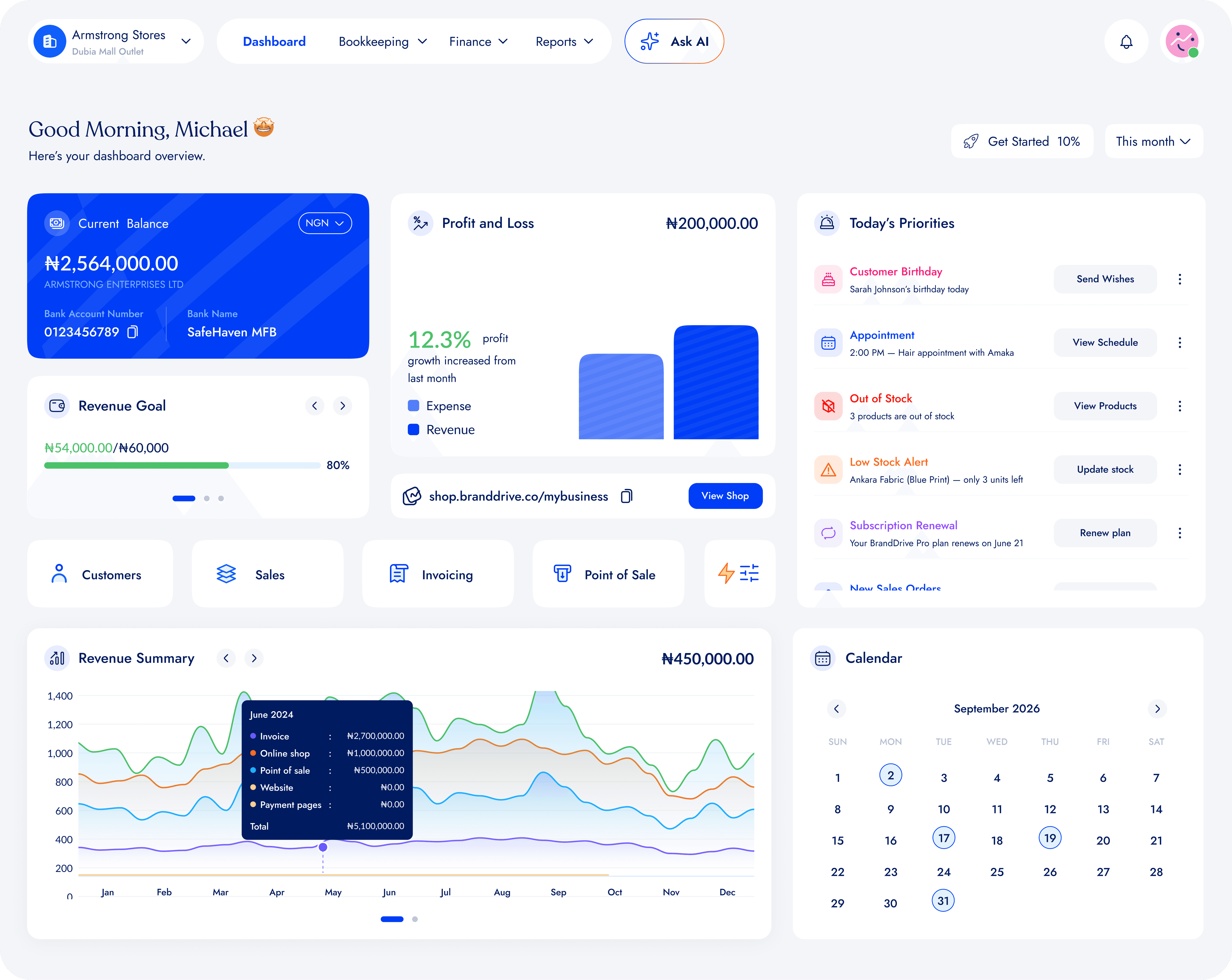
With BrandDrive Personal, you can record your income, track your expenses, monitor your savings, and see where your money is going without having to maintain complicated spreadsheets.
Whether you're managing only your NYSC allowance or combining it with a PPA stipend and side hustle income, everything stays in one place, making it easier to stay in control of your finances.
Conclusion
Tracking your income and expenses is all about understanding your money well enough to make better decisions.
The sooner you build that habit during NYSC, the easier it becomes to save consistently, avoid unnecessary spending, and prepare for life after POP.
If you're looking for the complete guide to managing your finances throughout the service year, read our Complete Financial Survival Guide for NYSC Members in Nigeria, which covers budgeting, saving, side hustles, and preparing for life after NYSC.