

Most people think they're budgeting when they're actually just hoping everything works out.
At the beginning of the month, you tell yourself you'll spend less on transport, eat out less often, and finally save at least ₦20,000 before the month ends.
Then life happens as it always does. Transport costs increase, an unexpected expense comes up, or you even buy a few things you didn't plan for.
And before you know it, the month is almost over, and you're left wondering where all your money went.
If that sounds familiar, you're not alone; One of the biggest reasons people struggle with money is that they confuse budgeting with expense tracking. They sound similar, but they do completely different jobs.
Once you understand the difference, managing your money becomes much easier.
Expense Tracking: What It Means
Expense tracking simply means keeping a record of where your money actually goes.
Every transfer, POS payment, cash purchase, and online subscription. In fact, anything you spend money on should be recorded.
Now, the goal is not to stop spending; however, you will have to know exactly what you spent your money on and where it went.
When you track your expenses consistently, you start noticing things you would have otherwise missed.
Maybe transport is taking a bigger share of your income than you realized; maybe you're spending far more on Iya Basirat’s food than you thought, or maybe those small daily purchases you've been ignoring are slowly adding up every month.
Expense tracking answers this question:
"Where did my money actually go?"
Budgeting: What It Means
Budgeting happens before you spend any money.
Instead of looking at what already happened, you're deciding how you want your money to be used.
For example, you might decide that this month you'll spend:
₦30,000 on transport
₦50,000 on feeding
₦20,000 on savings
₦15,000 on entertainment
A budget gives every naira a purpose before you spend it.
It answers a different question:
"Where should my money go?"
Can You Track Expenses Without a Budget?
Imagine you tracked every expense you made this month.
At the end of the month, you discover that:
₦45,000 went to transport.
₦18,000 went to data.
₦27,000 went to eating out.
That's useful information, but useful information alone doesn't change anything.
How do you know whether ₦45,000 on transport is too much? Or is ₦27,000 for eating out reasonable?
Without a budget, you have nothing to compare those numbers against. You're only seeing what has already happened.
Can You Budget Without Tracking Your Expenses?
Now imagine the opposite. You carefully create a budget, and everything looks perfect on paper, but throughout the month, you never check what you're actually spending.
By the end of the month, you realize you've gone far above your transport budget, overspent on subscriptions, and completely forgotten about several small purchases.
The budget wasn't the problem; the problem was that you had no way of knowing whether you were sticking to it.
A budget without tracking quickly becomes something you create at the beginning of the month and forget about afterwards.
How Budgeting and Expense Tracking Work Together
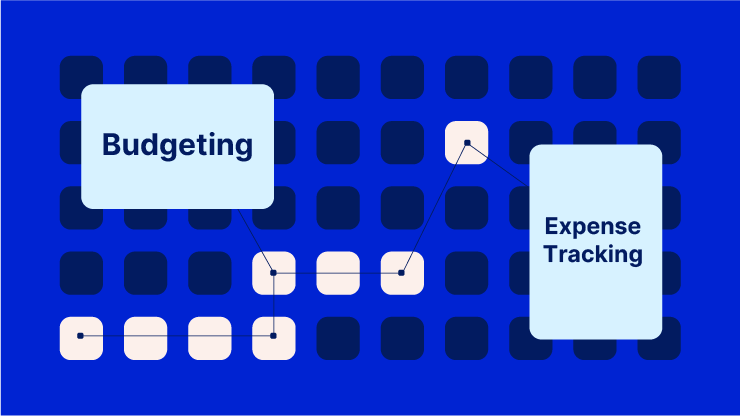
The easiest way to think about it is this: Budgeting tells your money where you want it to go, while expense tracking tells you where it actually went.
One creates the plan; the other shows whether it is working.
That's why the two should always work together.
A simple process looks like this:
1. Create your budget.
2. Track your spending every day.
3. Compare your spending with your budget.
4. Adjust next month's budget based on what you learned.
That's how you gradually take control of your finances instead of guessing every month.
What This Looks Like for a Small Business
Let's say you own a provisions store, and last month, your records showed that you spent:
₦120,000 restocking your shop
₦25,000 on transport
₦15,000 on other business expenses
That's expense tracking.
Now you decide that this month you'll reduce miscellaneous expenses to ₦10,000 and keep stock purchases below ₦100,000; that's what budgeting is.
Without last month's records, those targets would just be random numbers, and without this month's budget, you'll probably repeat last month's spending without even noticing.
The two work together.
Why Keeping Them in One Place Makes Life Easier
One reason many people stop budgeting is because they're using too many different systems.
The budget is inside a notebook, and expenses are written somewhere else.
Receipts are scattered across WhatsApp chats and bank alerts; eventually, keeping everything updated becomes tiring.
Instead of updating different notebooks, spreadsheets, and apps, it is much easier when everything is in one place. You spend less time trying to remember where you wrote something down and more time actually managing your money.
With BrandDrive, you can track both your personal and business expenses, monitor your spending against your goals, and see where your money is going without jumping between multiple apps or spreadsheets.
Conclusion
The goal is not to become someone who never spends money; it is to know where your money is going before it disappears.
Budgeting helps you make the plan; expense tracking shows whether you're following it.
When both work together, managing your money becomes much easier.
If you want to keep your budget and expense tracking in one place, BrandDrive helps you monitor your income, expenses, and financial goals without switching between multiple apps or spreadsheets.
_____________________________________________________________________________
Frequently Asked Questions
Is expense tracking the same as budgeting?
No.
Expense tracking records where your money has already gone, while budgeting helps you decide where you want your money to go before you spend it.
Which should I start with?
Start by tracking your expenses.
Once you understand your spending habits, creating a realistic budget becomes much easier.
Can I budget without tracking my expenses?
You can, but it becomes difficult to know whether you're actually following your budget.
Tracking gives your budget something to measure against.
What's the best way to manage both?
Using one system for both budgeting and expense tracking is usually easier than maintaining separate notebooks or spreadsheets.
